Southwark council rubbish rules for Peckham flats and HMOs
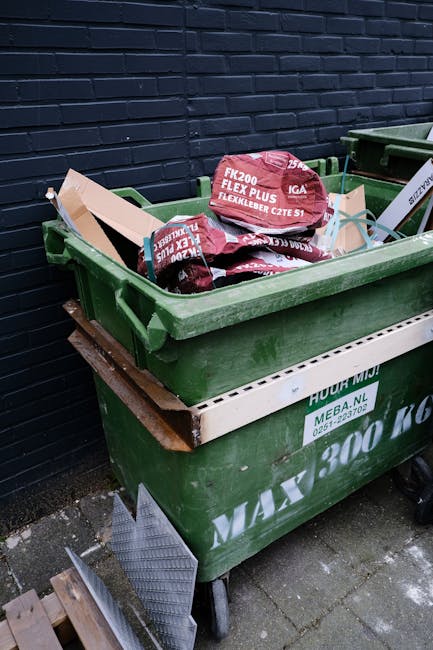
If you live in a Peckham flat or manage an HMO, rubbish can get messy fast. One missed collection, one overflowing shared bin store, and suddenly the whole building feels off. The smell, the flies, the awkward note on the landing... you know the sort of thing. This guide to Southwark council rubbish rules for Peckham flats and HMOs explains how waste is meant to be handled, what usually causes problems, and how to keep things orderly without turning bin day into a weekly crisis.
Whether you are a tenant, landlord, letting agent, or house manager, the goal is the same: keep waste collected correctly, avoid contamination, and reduce the risk of fines, complaints, or missed collections. We will walk through the rules in plain English, cover common HMO pain points, and show when a proper clearance or tidy-up might be the simplest fix. If you also need practical help after a flat clear-out, you may find the guidance on recycling and sustainability useful.
Truth be told, rubbish rules only sound boring until they go wrong. Then they become very visible, very quickly.
Why Southwark council rubbish rules for Peckham flats and HMOs matters
Peckham has a lot of shared housing, converted flats, and busy streets where waste storage space is limited. That makes rubbish rules more than a background issue. In flats and HMOs, waste affects neighbours, building cleanliness, pest prevention, fire safety, and even how a property is perceived by visitors or prospective tenants.
When waste is handled badly, the problems stack up. A bag left in a hallway can block access. A broken bin lid can attract vermin. A mixed recycling bin can lead to rejected collections. And in a shared property, one person's "I'll sort it tomorrow" can become everyone else's frustration by Thursday morning.
For landlords and managing agents, this matters because waste issues are rarely just cosmetic. They can trigger complaints, cause repeat clean-ups, and create friction between occupiers. For tenants, the issue is simpler but no less real: if the bin system is confusing, people default to whatever is easiest, and that is usually the wrong thing. That is why clear rubbish arrangements in a Peckham HMO are worth getting right from the start.
Practical takeaway: good waste management is not just about compliance. It keeps the building usable, protects neighbour relations, and saves time later. A bit of structure now often prevents a lot of hassle later.
How Southwark council rubbish rules for Peckham flats and HMOs works
In simple terms, Southwark Council expects household waste to be presented in the correct containers, on the correct day, in a way that allows collection crews to do their job safely and efficiently. In flats and HMOs, that usually means shared bins, agreed storage points, and clear rules about what goes where.
Most properties fall into one of a few patterns:
- Purpose-built flats with communal bin stores or shared bin chambers.
- Converted flats where residents may have individual bins or a shared set of bins.
- HMOs with multiple occupants sharing kitchen and waste facilities.
- Managed blocks where a caretaker or managing agent oversees waste presentation.
The council side of the arrangement is usually fairly straightforward from the resident's perspective: separate recycling where required, put waste out correctly, and avoid leaving loose rubbish beside bins. The real difficulty is the shared living environment. One flat may recycle carefully while another throws everything in together. That is where contamination and overflow start.
In an HMO, the bin system needs to work for real life, not just on paper. If the recycling bin is hidden in a dark yard, the food waste caddy is leaking, and nobody knows which collection day applies to which container, confusion is inevitable. To be fair, even well-meaning residents can get this wrong when instructions are vague.
It is also worth separating three things that people often mix together:
- Collection rules - what goes out, when, and how it should be presented.
- Storage rules - where bins are kept between collections, especially in communal areas.
- Clearance needs - what happens when waste has piled up after a move-out, refurbishment, or tenancy turnover.
If the last point is your issue, a proper flat clearance can be easier than trying to rescue an overloaded bin store one bag at a time. Our page on pricing and quotes may help you plan that side of things.
Key benefits and practical advantages
There is a tendency to think of rubbish rules as a council-only issue. In practice, following them well has real day-to-day benefits for everyone in the building.
Cleaner shared spaces
Clear systems reduce the odds of bins spilling into hallways, yards, and shared entrances. That matters in Peckham flats, where space is often tight and one awkward corner can become a permanent dumping spot if nobody takes control of it.
Lower pest and odour risk
Mixed food waste, overfilled sacks, and unwashed containers can all attract pests. Even when the waste is technically "out of sight", a bin store that is never cleaned will make its presence known. You can smell it before you see it. Not ideal.
Better neighbour relationships
Few things cause building tension quite like rubbish disputes. A clear waste plan takes pressure off residents and reduces the passive-aggressive messages that appear on shared noticeboards. Small win, but a real one.
Fewer rejected collections
Contaminated recycling or badly presented waste can disrupt collection. In a busy block, one rejected load can create a ripple effect that lasts for days.
Less reactive cleaning
For landlords and agents, structured waste handling usually means fewer emergency callouts and fewer last-minute scrambles before inspections, viewings, or new tenancies.
If you are balancing waste issues with broader property management, it can help to look at the operation as a whole, not a single chore. Our about us page explains the kind of hands-on local support that can make the process less stressful.
Who this is for and when it makes sense
This guide is for anyone dealing with shared household waste in Peckham. That includes more people than you might think.
- Tenants who are unsure what goes in which bin or where to leave it.
- Landlords who want to reduce complaints and keep the property tidy.
- Letting agents managing move-outs, inspections, or compliance matters.
- HMO managers responsible for shared storage and resident instructions.
- Freeholders and resident groups overseeing communal areas.
- Anyone clearing out a flat after a tenancy ends or a refurbishment starts.
It makes sense to get serious about rubbish arrangements when one or more of these starts happening:
- bin stores are overflowing before collection day
- recycling is regularly mixed with general waste
- residents leave bags in hallways or on pavements
- there are repeated complaints about smell or mess
- a flat has just been emptied and there is bulky waste to remove
- an HMO has too many people sharing too few bins
In short: if the waste system only works when everyone is unusually careful, it is not really a system. It is a hope. And hope, as we all know, does not take the bins out.
Step-by-step guidance
If you are setting up or improving waste handling in a Peckham flat or HMO, work through it methodically. A little structure here saves a lot of headaches later.
1. Identify the property setup
First, work out what you are dealing with. Is it a converted house with separate occupiers? A purpose-built block? A classic HMO with a shared kitchen and one bin store? The layout affects what is practical. There is no point designing a rubbish routine that assumes lots of space if the building barely has room for one wheeled bin and a bike.
2. Confirm which bins and containers are available
Check the number, condition, and placement of bins. Lids should close. Wheels should roll. Containers should be clearly accessible. If residents have to drag rubbish through a narrow hallway or down several stairs, compliance becomes much harder.
3. Label the waste points clearly
Use clear, plain-English instructions. Residents should know where general waste goes, where recycling goes, and what should never be left loose. A small sign in the bin store often helps more than a long email that nobody rereads.
4. Set a collection routine
Agree who takes bins out, who brings them back, and on which days they should be presented. In HMOs, this is often the difference between an orderly building and one that gradually drifts into chaos by midweek.
5. Deal with bulky items separately
Mattresses, broken furniture, bags of old clothes, and unwanted appliances should not be left next to standard bins. If somebody has moved out or dumped unwanted items, arrange removal before the pile spreads. If you need a faster way to clear a flat after a turnover, it may be worth reviewing the site's terms and conditions before booking anything.
6. Keep recycling clean
Contamination is a common issue in shared properties. Food residue, nappies, black sacks, and loose non-recyclables can all spoil a recycling bin. A simple reminder near the kitchen exit can help more than you might expect.
7. Review the setup after one month
Do not assume the first plan will be perfect. After a few collection cycles, check what is going wrong. Are bins overflowing too soon? Are residents confused about days? Is access poor? Adjust accordingly. It usually needs a bit of fine-tuning.
Expert tips for better results
Here is where small details make a surprisingly large difference.
Keep waste storage visible but not in the way
If the bin area is too hidden, people forget it. If it is too exposed, it becomes a dumping point. The best setups are obvious enough to use and tidy enough to respect. That balance is annoying to get right, but worth it.
Use one simple instruction sheet
Residents are more likely to follow a clear one-page guide than a long policy document. Keep it short: what goes where, when to put it out, and what not to dump beside the bins.
Design for the least engaged resident
This sounds cynical, but it is realistic. A good HMO waste system should still work if one person ignores the group chat, misses the email, or forgets collection day because they had a long shift. Build for real humans, not perfect ones.
Separate "daily rubbish" from "exit rubbish"
End-of-tenancy waste is a different beast. Old bedding, unwanted cookware, broken chairs, mystery boxes from the back of cupboards... it tends to appear all at once. If you are dealing with that sort of clearance, use a proper planned removal rather than trying to squeeze it into routine bins.
Keep a spare contingency plan
Sometimes a bin lid breaks. Sometimes a collection is missed. Sometimes a resident dumps a sofa in the yard on a rainy Tuesday and everyone pretends not to notice. Having a backup route for clearance prevents the whole place from sliding downhill.
For properties where safety and access matter, it can help to choose a provider that is clear on process and handling. You can review insurance and safety information if you want more reassurance around how a clearance job is managed.
Common mistakes to avoid
These are the mistakes we see most often in flats and HMOs, and they are usually easy to prevent once you spot them.
- Leaving waste instructions too vague. "Use the bins properly" is not a system.
- Assuming everyone knows the collection day. They often do not, especially after a tenancy change.
- Letting recycling contaminate general waste, or vice versa. One wrong bag can spoil the lot.
- Ignoring bulky waste. If it cannot fit in a normal bin, it needs a separate solution.
- Overfilling the storage area. A cramped bin store becomes a magnet for fly-tipping.
- Not assigning responsibility. In shared buildings, "someone will sort it" usually means nobody will.
- Delaying action after a move-out. A delay of a few days can turn into a whole weekend lost to clearing up.
A common one is leaving old furniture in communal areas because it feels easier than booking removal. It is not easier. It just pushes the problem into next week, where it tends to get bigger and smell slightly worse.
Tools, resources and recommendations
You do not need a complicated setup to manage rubbish well in Peckham flats and HMOs. The basics work best.
Simple tools that help
- clear bin labels
- a printed collection-day notice
- a resident welcome sheet for HMOs
- durable bin store signs
- basic cleaning supplies for the bin area
- sealed bags for food waste where appropriate
Operational recommendations
Use the same message in every format. If you tell people one thing in a WhatsApp group and another in a hallway sign, confusion follows. Keep language plain, repeat the key points, and update notices when collection routines change.
If a property regularly generates excess waste, think beyond the bins. A one-off clearance, periodic maintenance visit, or end-of-tenancy sweep may be cheaper in the long run than repeated tidying by your in-house team. For readers comparing practical options, the page on pricing and quotes is a sensible place to start.
Useful service-level mindset
A good waste arrangement should answer three questions without anyone having to chase for clarification:
- What goes where?
- Who puts it out?
- What happens when there is too much?
If those three things are clear, most day-to-day issues calm down pretty quickly. Not instantly. But quickly enough.
Law, compliance, standards, or best practice
Waste handling in flats and HMOs is shaped by a mix of council expectations, property management duties, tenancy arrangements, and general household waste practice. Exact obligations can vary depending on the building type, tenancy setup, and the specific waste stream involved, so it is sensible to check current local guidance where needed.
At a practical level, the safest approach is to treat waste as a managed part of the property, not a leftover chore. That usually means:
- keeping communal areas clear
- not blocking fire exits or access routes
- storing waste securely between collections
- preventing odour, leakage, and pest attraction
- making sure residents understand the system
- removing bulky or abandoned items promptly
For HMOs, this is especially important because shared occupancy increases the likelihood of misuse. If there is no clear assignment of responsibility, waste can quickly become a recurring management issue. That is one reason many landlords keep a written house routine, even for the small stuff.
Best practice also means thinking about sustainability rather than just disposal. Reducing contamination, reusing what can be kept in circulation, and separating recyclable items properly all make the waste stream easier to manage. You can read more about that approach on recycling and sustainability.
And one gentle note: if waste has become unsafe, unauthorised, or difficult to access, do not push people to improvise. Use a proper plan, keep the area safe, and get the right help.
Options, methods, or comparison table
Not every waste problem needs the same answer. Sometimes a resident reminder is enough. Other times you need a structured clearance. Here is a straightforward comparison.
| Method | Best for | Pros | Limitations |
|---|---|---|---|
| Resident-led bin routine | Small flats, stable households, low waste volume | Low cost, simple, flexible | Relies on everyone following the rules |
| Managed communal collection system | Blocks and HMOs with shared storage | More consistent, easier to monitor | Needs coordination and clear responsibility |
| One-off clearance | Move-outs, voids, accumulated clutter | Fast reset, removes bulky waste | Not a permanent fix if habits stay poor |
| Scheduled professional support | Properties with repeat waste issues | Reduces stress, keeps areas under control | Ongoing cost to budget for |
For many Peckham HMOs, the winning approach is a combination: a simple resident routine plus occasional professional support when the volume gets out of hand. That is often more realistic than expecting perfect behaviour every week. Let's face it, perfect systems are lovely in theory.
Case study or real-world example
Imagine a three-storey Peckham HMO with six residents and one shared rear bin area. On paper, it looks manageable. In practice, the recycling bin is full before the next collection, black bags get left beside the gate, and an old bedside cabinet has been sitting under a sheet in the corner for three weeks.
At first, the building manager assumes the issue is just "people being careless". But after a quick review, the real problems become obvious:
- the bin labels are faded and unclear
- new tenants were never shown the waste area
- there is no plan for bulky items
- the rear gate is awkward to open with a bin in hand
After the waste area is cleared, the signage is replaced, residents receive a short one-page guide, and bulky items are dealt with separately rather than left to accumulate. Within a couple of collection cycles, the bin store is calmer. Not perfect, but better. Much better.
That is the key lesson. In shared housing, rubbish problems are often systems problems. Fix the system and the behaviour usually improves with it.
Practical checklist
Use this checklist if you are reviewing a Peckham flat or HMO waste setup.
- Are the bins the right size for the number of occupants?
- Are collection days clearly displayed?
- Do residents know what goes in each container?
- Is the bin store easy to access and safe to use?
- Are bags ever left in hallways or by exits?
- Is recycling being contaminated by general waste?
- Is there a plan for bulky items and end-of-tenancy waste?
- Are bins returned after collection?
- Is the storage area cleaned regularly?
- Do tenants receive waste instructions when they move in?
- Does someone have responsibility for checking the system?
- Would a clearance or reset help right now?
If you answered "no" to more than a couple of those, there is probably some easy improvement available. That is usually the best place to start, before things get a bit more chaotic.
If you are dealing with a property that needs a proper reset, the safest next move is to speak with a local team that understands both the practical and compliance sides of the job. You can also use the contact page to discuss your situation directly.
Get a free quote today and see how much you can save.
Conclusion
Southwark council rubbish rules for Peckham flats and HMOs are not really about ticking a box. They are about keeping shared homes usable, respectful, and manageable. In a busy area like Peckham, where space is tight and occupancy changes can happen quickly, a simple waste system makes daily life easier for everyone involved.
If you are a tenant, keep the instructions simple and follow the collection routine. If you are a landlord or agent, make the system clear, maintain it, and deal with bulky waste before it turns into a bigger issue. And if the bin area has already tipped into a mess, do not feel bad about resetting it properly. That is often the smartest move, not the dramatic one.
For a company background and service reassurance, you can also read more about our approach and the practical standards behind health and safety policy. Small things done well tend to save the biggest headaches.
When the rubbish is under control, the whole property feels lighter. Cleaner air, less noise around the bins, fewer complaints. Simple as that, really.
Frequently Asked Questions
What are the main rubbish rules for flats in Southwark?
The main expectations are usually to use the correct bins, present waste on the correct collection day, and avoid leaving loose rubbish in communal areas. In flats, shared storage and clear instructions matter just as much as the bins themselves.
How do rubbish rules work in Peckham HMOs?
In HMOs, waste is normally shared by multiple occupiers, so the system needs to be simple and clearly explained. That often means labelled bins, a set routine for collection day, and one person or manager checking the area regularly.
What happens if recycling is mixed with general waste?
Mixed waste can lead to contamination, which may cause the recycling to be rejected or handled as general waste. In a shared property, one wrong bag can spoil the whole bin, so the instructions need to be very clear.
Can I leave furniture or bulky waste next to the bins?
No, bulky waste should not be left beside standard bins. It can block access, attract complaints, and create a mess very quickly. Arrange a separate removal for items like mattresses, chairs, or broken appliances.
Who is responsible for bin presentation in a shared flat?
That depends on the property setup, but in practice it should be clearly assigned. In many shared homes, one resident, a landlord, or a managing agent handles bin presentation to avoid confusion.
How often should a bin store be cleaned?
There is no one-size-fits-all rule, but bin stores should be cleaned regularly enough to prevent odour, spills, and pests. In higher-occupancy HMOs, a more frequent clean is usually sensible.
What is the best way to stop rubbish piling up in an HMO?
Keep the rules simple, label the bins clearly, set one clear routine, and deal with bulky waste quickly. A lot of HMO rubbish problems come from vague instructions rather than bad intent.
Do tenants need to be told about waste rules at move-in?
Yes, that is one of the easiest ways to prevent problems. A short, plain-English guide at move-in can reduce confusion and help new tenants settle into the routine quickly.
Should landlords arrange professional clearance after a tenancy ends?
If the flat has accumulated bulky waste, abandoned items, or a large amount of mixed rubbish, professional clearance can save time and reduce stress. It is often the cleanest reset after a busy changeover.
How do I know if my Peckham property needs more bins?
If bins are overflowing before collection day, waste is being left beside containers, or residents keep complaining, the current setup may be too small for the number of occupants. That is a practical sign to review the whole system.
Can rubbish problems affect neighbour complaints or inspections?
Yes, poor waste management can lead to complaints, tension, and questions from neighbours or managing parties. In shared buildings, cleanliness and access are part of the wider standard people expect.
What should I do if waste has already built up in the property?
First, make the area safe and accessible. Then sort what can be reused, recycled, or removed, and arrange a proper clearance for the rest. The longer it sits, the harder it becomes, so it is usually best not to wait.
For help with practical waste removal, clearances, and property resets, you can review the service information alongside service terms and payment and security details so you know what to expect before booking.